What Is Take-Home Pay? How Your Paycheck Is Calculated
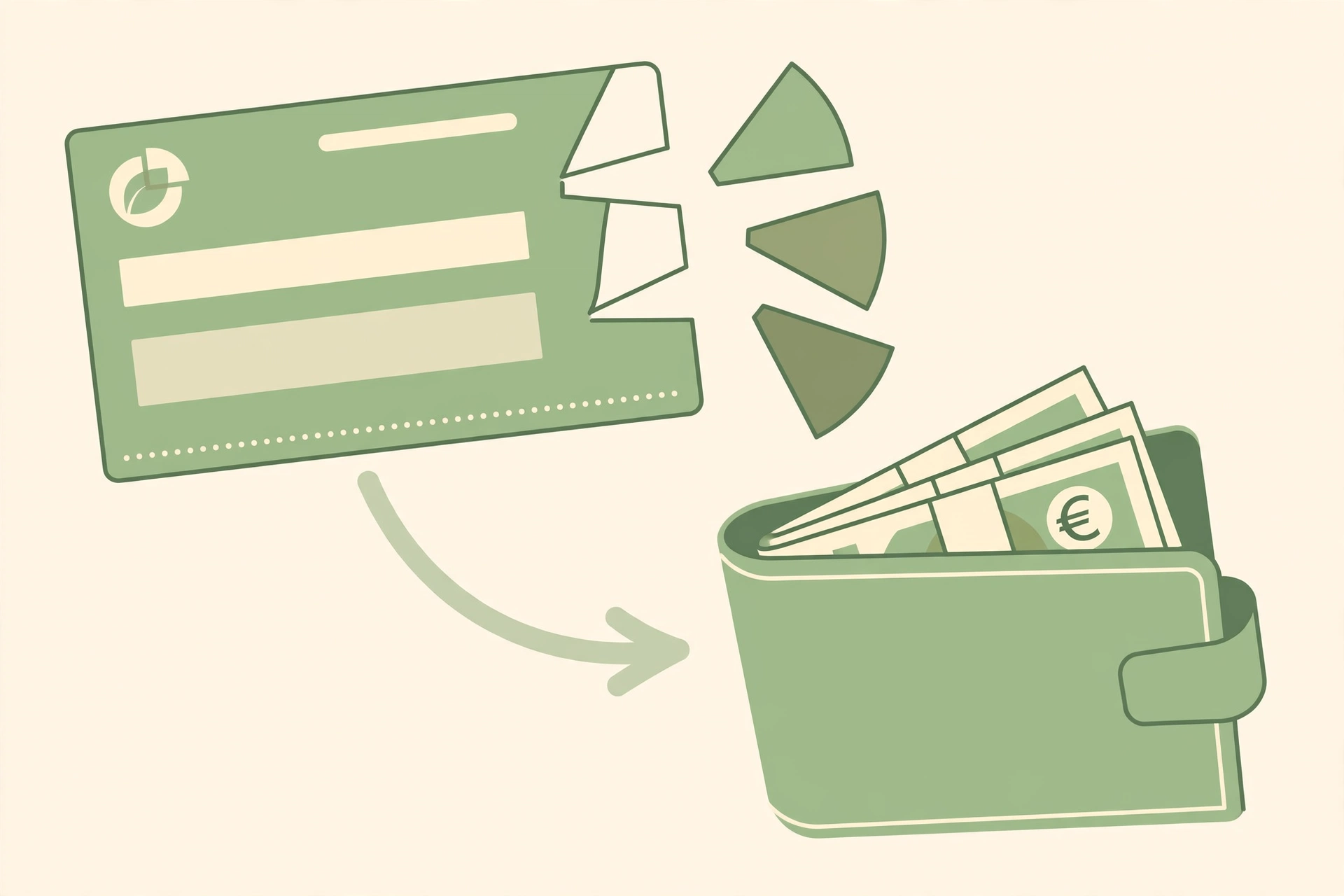
Take-home pay is the money that actually lands in your bank account after your employer subtracts taxes, insurance premiums, retirement contributions, and every other deduction from your gross earnings. While your salary is the headline number on your job offer, your take-home pay is the real number that decides what you can spend, save, and invest each month. Understanding your take-home pay is one of the most practical financial skills you can build, because every realistic budget must be built on the money you truly receive, not the figure printed in your contract.
Most people feel a jolt of surprise when they compare their stated salary with their first paycheck. A $60,000 annual salary sounds like $5,000 a month, yet the deposit that arrives is noticeably smaller. The gap between gross pay and take-home pay is filled with federal income tax, state and local taxes, Social Security and Medicare contributions, health insurance premiums, and retirement savings. This 2026 guide explains exactly what take-home pay means, how it is calculated step by step, and what you can do to increase the amount that reaches your account.
Below you will find clear definitions, a side-by-side look at gross versus net pay, a complete tour of common payroll deductions, realistic take-home pay examples at several income levels, proven tips to keep more of what you earn, and an eight-question FAQ answering the questions readers ask most. By the end, you will be able to read any pay stub with confidence.
What Is Take-Home Pay
Take-home pay, also called net pay, is your gross earnings minus every mandatory and voluntary deduction. Gross pay is what you earn before anything is removed: your salary, hourly wages, overtime, bonuses, tips, and commissions. Your employer must withhold certain amounts by law, such as income taxes and Social Security contributions, and you may authorize extra deductions for benefits like health insurance or a 401(k). Whatever remains after all subtractions is your take-home pay, and it should match the direct deposit in your bank account.
Think of gross pay as the promise and take-home pay as the delivery. Two employees with identical $70,000 salaries can have very different take-home pay because of where they live, how they filled out their tax withholding forms, which benefits they selected, and how much they contribute to retirement accounts. That is why comparing job offers by salary alone can be misleading. The smarter comparison is take-home pay, because it reflects the money you will actually have available each month.
Your take home pay appears on your pay stub as net pay. If you are paid twice a month, multiply one paycheck’s take home pay by 24 to estimate your annual net income. Financial planners recommend building your budget on take-home pay rather than gross pay, because rent, debt payments, groceries, and savings goals can only be funded with money you actually receive.
Gross vs Net Pay
Gross pay is your total compensation before deductions. For salaried workers, it is the annual salary divided by the number of pay periods. For hourly workers, it is hours worked multiplied by the hourly rate, plus any overtime, bonuses, tips, and commissions. Net pay, or take-home pay, is what remains after every deduction is subtracted. The relationship is simple: take-home pay equals gross pay minus total deductions.
The gap between gross and net usually falls between 20 and 40 percent, depending on your income level, tax jurisdiction, and benefit choices. Someone earning $50,000 in a state with no income tax and minimal benefits might keep about 78 percent of gross pay, while someone earning $150,000 in a high-tax state with generous benefits might keep only about 62 percent. Knowing this range helps you set realistic expectations when you get a raise, change jobs, or move to a new state.
- Gross pay: total earnings before deductions, the number printed in your offer letter.
- Net pay (take-home pay): earnings after all deductions, the number deposited in your account.
- Deductions: taxes, insurance premiums, retirement contributions, and other withholdings that bridge the two.
Common Payroll Deductions
Payroll deductions come in two groups: mandatory deductions required by law and voluntary deductions you elect. Mandatory deductions include federal income tax, state and local income taxes where they apply, and FICA taxes for Social Security and Medicare. Voluntary deductions include health, dental, and vision insurance premiums, retirement plan contributions, life and disability insurance, union dues, and charitable donations. If you believe a deduction on your stub is wrong, the U.S. Department of Labor explains your wage rights at dol.gov.
- Federal income tax: withheld according to your W-4 form and the progressive tax brackets. Higher slices of earnings are taxed at higher marginal rates.
- State and local income tax: varies widely. Nine states tax no wage income at all, while others charge flat or graduated rates, and some cities add their own tax.
- Social Security tax: 6.2 percent of wages up to the annual wage base, matched dollar for dollar by your employer.
- Medicare tax: 1.45 percent of all wages, plus an additional 0.9 percent on earnings above $200,000 for single filers.
- Health insurance premiums: your share of medical, dental, and vision coverage, usually deducted pre-tax.
- Retirement contributions: 401(k) or 403(b) deferrals that lower your taxable income when made pre-tax.
- HSA and FSA contributions: pre-tax dollars set aside for qualified medical costs.
- Other deductions: life insurance, disability coverage, union dues, wage garnishments, and Roth 401(k) contributions made after tax.
How Taxes Affect Take-Home Pay
Taxes are usually the largest reduction to take-home pay. The United States uses a progressive federal income tax system, which means successive portions of your income are taxed at higher rates as your earnings climb through the brackets. A raise never makes you take home less overall, because only the dollars inside the higher bracket are taxed at the higher rate. Still, at higher incomes the federal bite becomes the dominant reason take-home pay lags behind gross pay.
Your W-4 form controls how much federal tax your employer withholds from each paycheck. If too little is withheld, you get larger paychecks but owe money at tax time. If too much is withheld, you give an interest-free loan to the government and wait for a refund. The IRS offers a free Tax Withholding Estimator at irs.gov to help you set it correctly, and you should review your W-4 after major life events such as marriage, a new child, a second job, or a big raise.
State and local taxes add another layer of variation. Moving from a high-tax state to one with no income tax can raise your take-home pay by hundreds of dollars per month without any change in salary. Some cities levy their own income taxes on top of state taxes. When you evaluate a relocation or a remote-work arrangement, always compare take-home pay under each jurisdiction’s rules rather than comparing gross salaries.
FICA taxes work differently from income tax. Social Security takes 6.2 percent of wages up to the annual wage base, and Medicare takes 1.45 percent of every dollar with no cap, plus the 0.9 percent additional Medicare tax on high earners. Your employer matches both amounts. Because there is no standard deduction for FICA, these taxes apply from the very first dollar you earn, which is why even modest paychecks show a visible gap between gross and take-home pay.
Take-Home Pay Examples
Concrete numbers make the concept stick. The simplified examples below assume a single filer taking the standard deduction with one full-time job. Your own figures will differ, but the pattern of stacking deductions is the same for everyone.
Example 1: $4,000 monthly gross pay. Federal income tax of about $330, FICA of $306, a $150 health insurance premium, and a 5 percent 401(k) contribution of $200 bring total deductions to roughly $986. Take-home pay is about $3,014, or 75 percent of gross. Notice that the pre-tax 401(k) contribution also shrinks the income subject to federal tax, which slightly reduces the tax line itself.
Example 2: $6,500 monthly gross pay. Federal income tax of about $780, FICA of $497, state tax at 5 percent of $325, health and dental premiums of $220, and a 6 percent 401(k) contribution of $390 bring total deductions to roughly $2,212. Take-home pay is about $4,288. The higher earner keeps a smaller percentage because progressive tax rates take a bigger share of each additional dollar.
Want your personalized numbers? Run your salary through our free paycheck calculator to see a full take-home pay breakdown in seconds.
Tips to Increase Take-Home Pay
You cannot change the tax brackets, but you do control several levers that raise your take-home pay. The strategies below are legal, practical, and available to most employees.
- Fix your W-4 withholding: if you consistently receive large refunds, you are over-withholding. Adjusting your W-4 puts that money in each paycheck instead of making you wait for a refund.
- Use pre-tax accounts: 401(k), HSA, and FSA contributions reduce your taxable income, which lowers income tax and increases take-home pay relative to saving after tax.
- Open an HSA if eligible: contributions are pre-tax, growth is tax-free, and withdrawals for medical costs are tax-free. This rare triple advantage also trims each paycheck’s tax bite.
- Review benefits every open enrollment: a cheaper health plan tier or dropping duplicate coverage can add $50 to $200 per month to take-home pay.
- Claim every credit you qualify for: credits such as education credits reduce your total tax, which means less withholding is needed across the year.
- Weigh state taxes: remote workers may keep more by living in a lower-tax state, though residency rules are strict, so confirm them before making a move.
- Grow gross pay: raises, overtime, bonuses, and promotions lift take-home pay too, because you keep most of each extra dollar even after higher withholding.
Common Mistakes
Small misunderstandings about take-home pay lead to expensive errors. Avoid these frequent traps.
- Budgeting on gross pay: building a budget on your salary instead of your take-home pay guarantees a shortfall. Always budget from net pay.
- Ignoring your W-4 after life changes: marriage, divorce, a new baby, or a second job all change your correct withholding. An outdated W-4 means the wrong take-home pay all year.
- Skipping the employer 401(k) match: turning down matching contributions for slightly bigger paychecks throws away free money that compounds for decades.
- Never checking the pay stub: payroll errors happen. Verify gross pay, hours, tax withholding, and benefit deductions at least once a year.
- Choosing benefits on autopilot: re-enrolling in the same expensive plan without comparing options can cost hundreds per month in unnecessary premiums.
- Forgetting the extra Medicare tax: high earners above $200,000 should expect the additional 0.9 percent Medicare withholding rather than being surprised by it.
Frequently Asked Questions
What is take-home pay in simple terms?
Take-home pay is the money left after all deductions are removed from your gross earnings. It is the amount deposited into your bank account on payday, and it is the number you should use for budgeting, saving, and spending decisions.
How do I calculate my take-home pay?
Start with gross pay for the pay period, then subtract federal income tax, state and local taxes, Social Security and Medicare taxes, insurance premiums, and retirement contributions. The result is your take-home pay. Our paycheck calculator automates the math for you.
Why is my take-home pay lower than my salary?
Your salary is gross pay before deductions. Federal, state, and FICA taxes plus benefit premiums and retirement contributions are removed before you are paid, so take-home pay is always lower than the salary figure, usually by 20 to 40 percent.
What is the difference between gross pay and take-home pay?
Gross pay is total earnings before anything is taken out. Take-home pay, also called net pay, is what remains after taxes and deductions. The formula is simple: take-home pay equals gross pay minus total deductions.
Can I increase my take-home pay without getting a raise?
Yes. Correcting your W-4 withholding, contributing to pre-tax accounts like a 401(k) or HSA, choosing a cheaper health plan, and claiming tax credits you qualify for can all raise your take-home pay without changing your salary.
Does overtime increase take-home pay by the full overtime amount?
Not quite. Overtime is taxed at your marginal rates, so you keep the overtime premium minus taxes and any percentage-based deductions. You still come out ahead, because you keep most of each extra dollar you earn.
Are bonuses included in take-home pay?
Yes. Bonuses are part of gross pay and flow into take-home pay after withholding. Employers often withhold federal tax on bonuses at a flat supplemental rate, which can make the bonus check look smaller than expected until you file your return.
Where can I find my exact take-home pay?
Your pay stub lists net pay for each period, and it should match your direct deposit. Year-to-date totals on your final December stub show your annual take-home pay.
Key Takeaways
- Take-home pay is gross earnings minus taxes, insurance, retirement, and other deductions.
- The gap between gross and take-home pay is typically 20 to 40 percent.
- Federal, state, and FICA taxes are the biggest deductions for most workers.
- Pre-tax contributions to 401(k), HSA, and FSA accounts reduce taxable income.
- Adjusting your W-4 is the fastest way to fix take-home pay that is too low or too high.
- Always budget from take-home pay, never from gross salary.
Final Thoughts
Your take-home pay is the most honest number in your financial life. It strips away the illusion of your gross salary and shows exactly what you have to work with. Once you understand how taxes, FICA, insurance premiums, and retirement contributions shape your paycheck, you can make deliberate choices that keep more of every dollar you earn, from tuning your W-4 to maximizing pre-tax accounts.
Start today by pulling up your latest pay stub and tracing each deduction line. Then explore more free financial tools and guides on the CalcWise homepage to keep building your money skills. Small, informed adjustments to your take-home pay compound into life-changing sums over a career.